Date: Saturday 7th March 2026
Venue: Ely Cathedral
Programme: War Requiem – Benjamin Britten
Featuring: Fairhaven Singers, Ely Consort, York Chapter House Choir, Students from Stephen Perse Cambridge, Soprano ~ Anita Watson, Tenor ~ Christopher Lemmings, Baritone ~ James Cleverton, Brandenburg Sinfonia
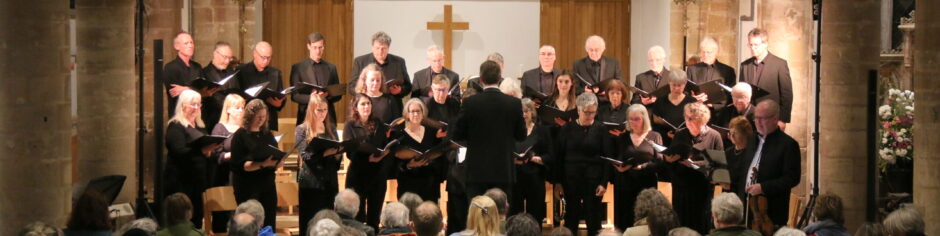
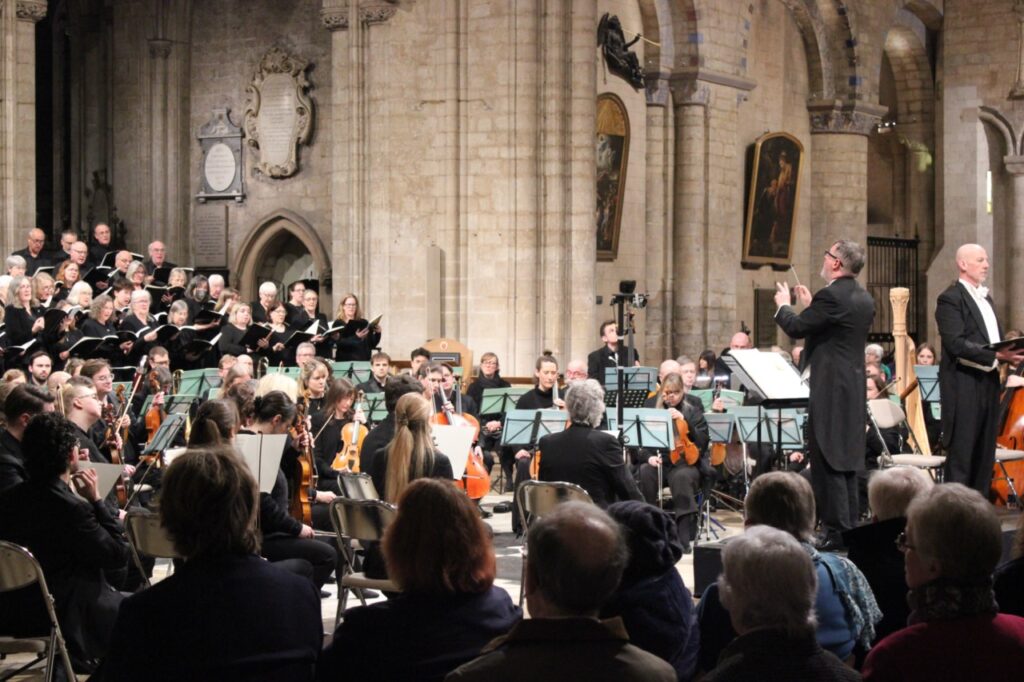
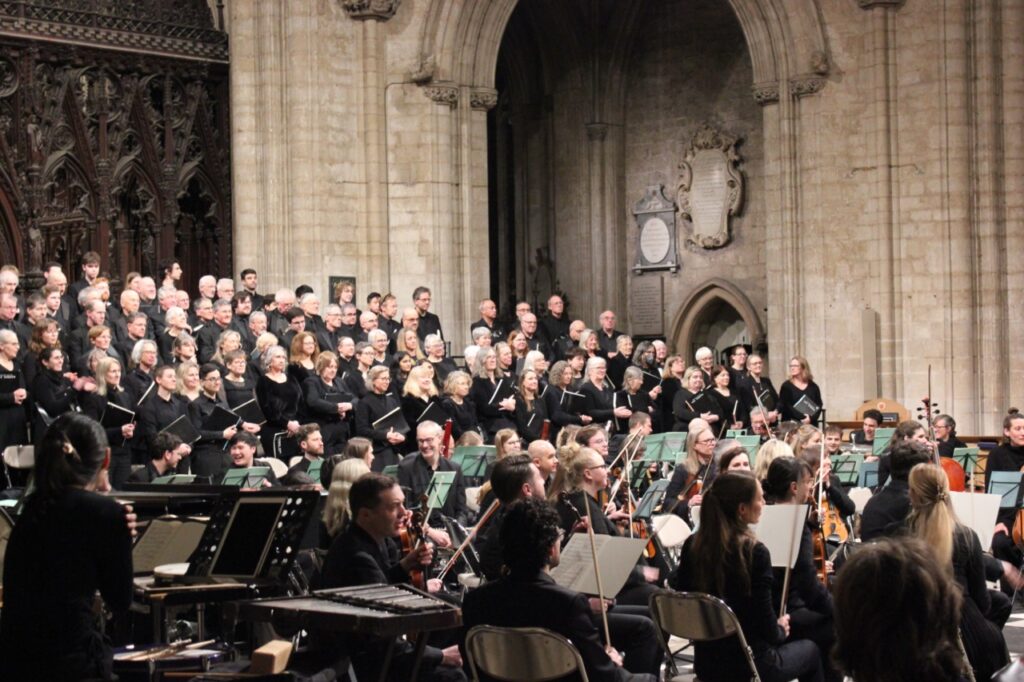
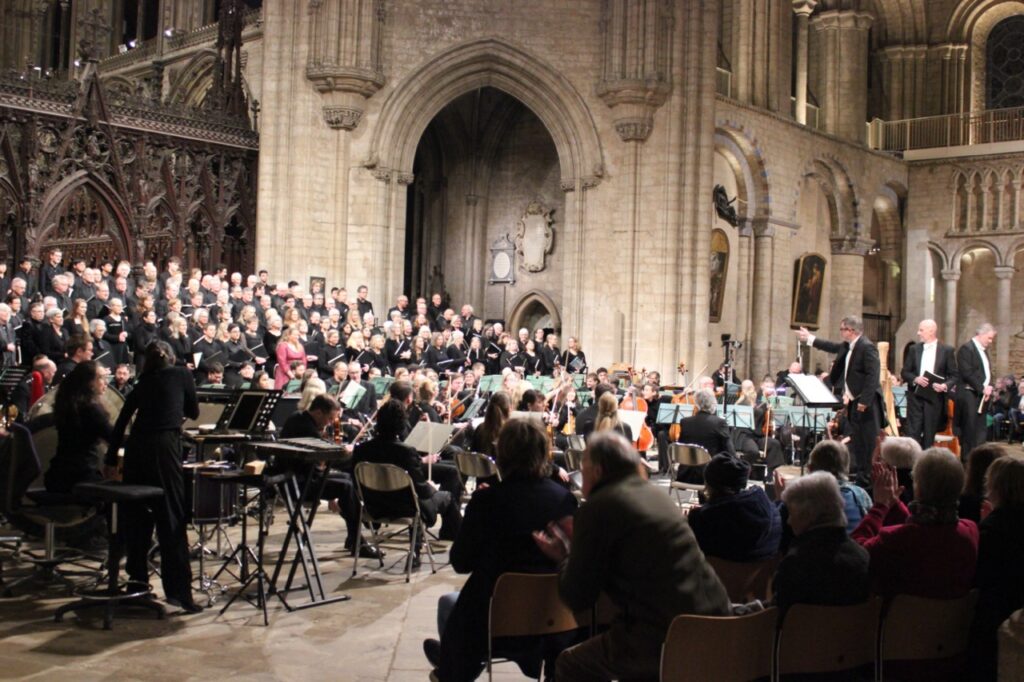
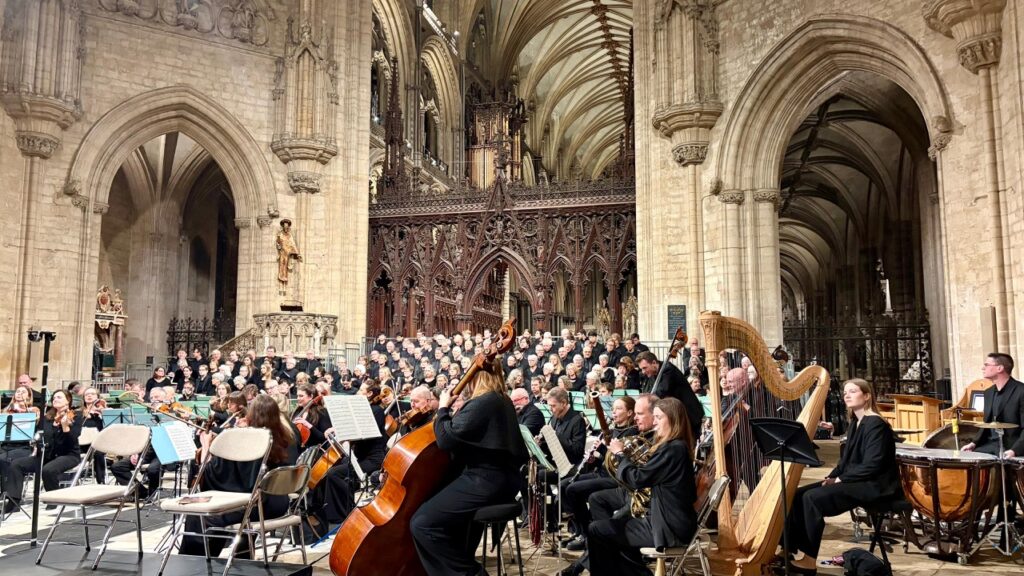
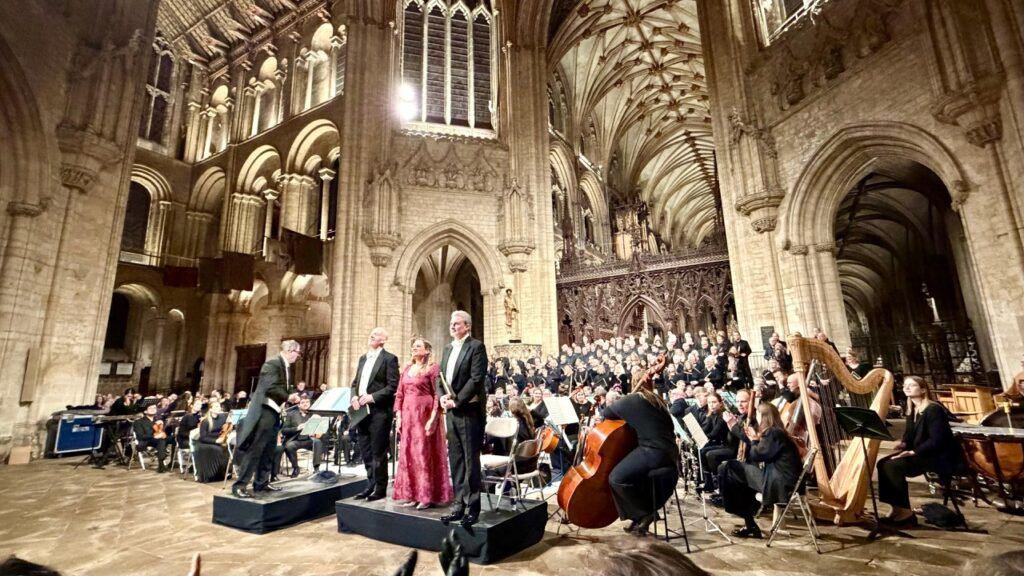
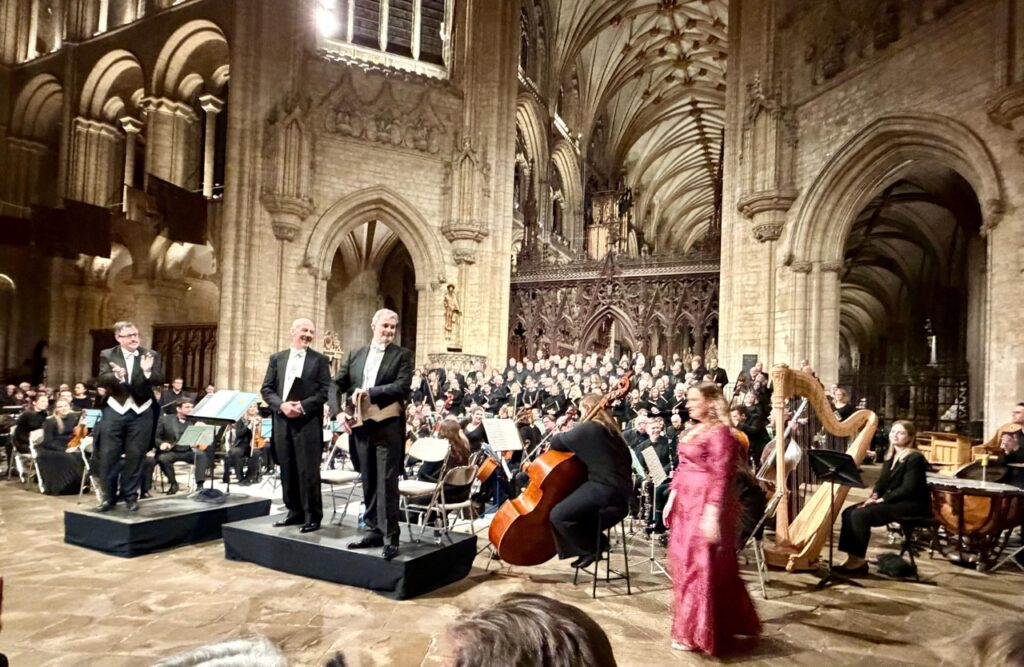
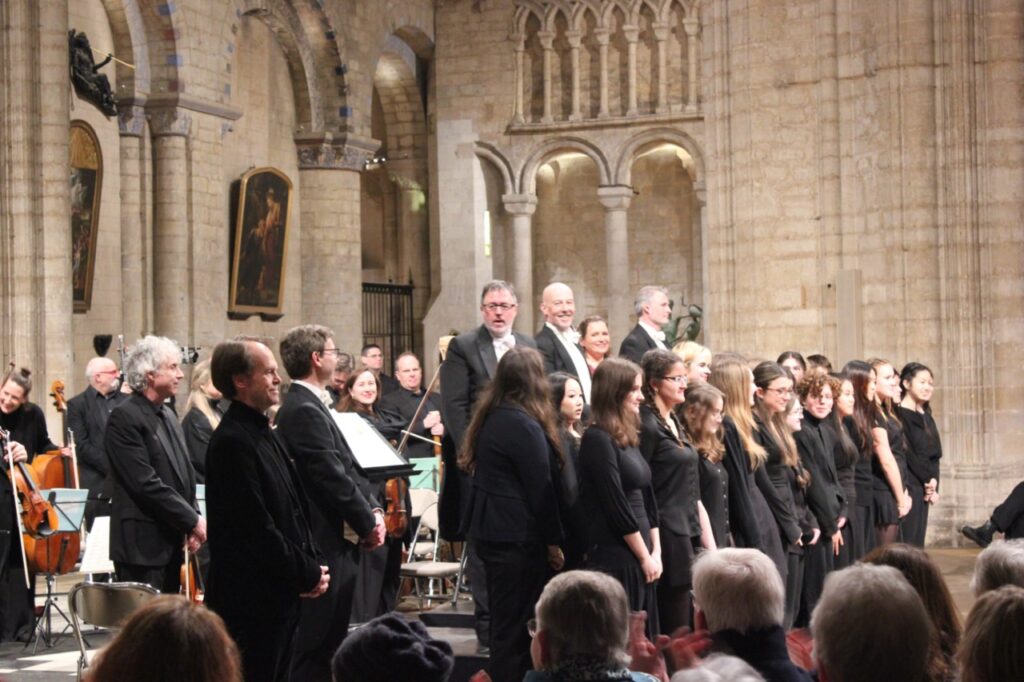
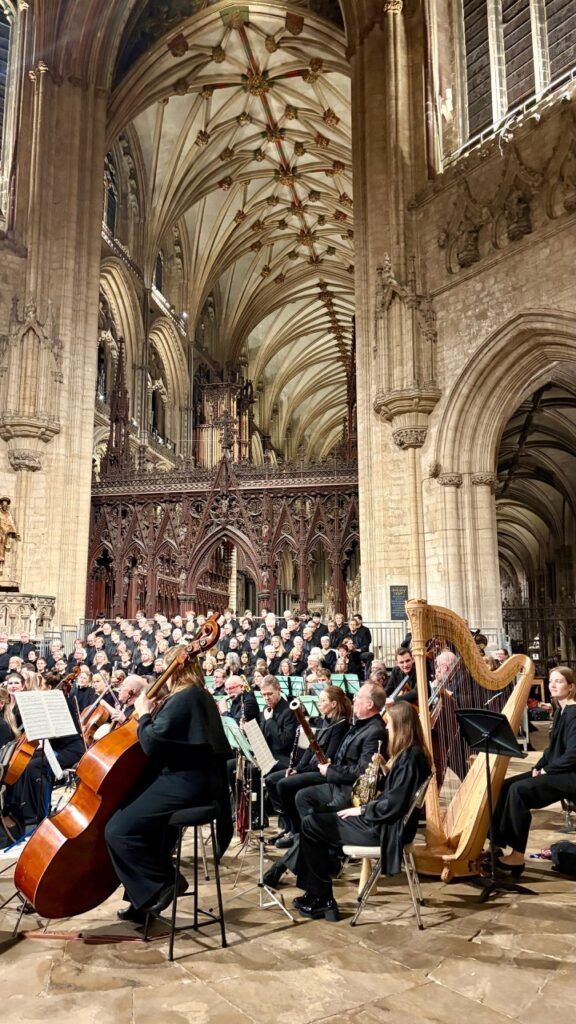
It was no wonder Ely Cathedral was packed and the tickets nearly sold out for the performance of Benjamin Britten’s War Requiem. It was a mammoth performance that held one transfixed from beginning to end. It featured Fairhaven Singers, Ely Consort, York Chapter House Choir, Singers from Stephen Perse Cambridge, and the Brandenburg Sinfonia, with soloists Anita Watson (soprano) Christopher Lemmings (tenor) and James Cleverton (baritone). It was conducted by Ralph Woodward. These excellent musicians brought home the dreadfulness of war and a desire for peace as intended.
Much of the effectiveness of Britten’s score was the way in which the Latin Mass for the Dead associated with high church was intermixed with the very different, down-to-earth poetry of Wilfred Owen. Britten’s rich and varied orchestration included very different voice and instrumental parts that helped create a moving tapestry of sound that ranged from highlighted single emotive words to massive tempestuous expressions of wrath or indignation.
The chorus was splendid. The singers sang with clarity and a beautifully controlled tone. The punctuated menace expressed in the Dies Irae was particularly impressive. The gentleness of the interweaving of choir and orchestra in the opening verses of Recordate was mesmerising.
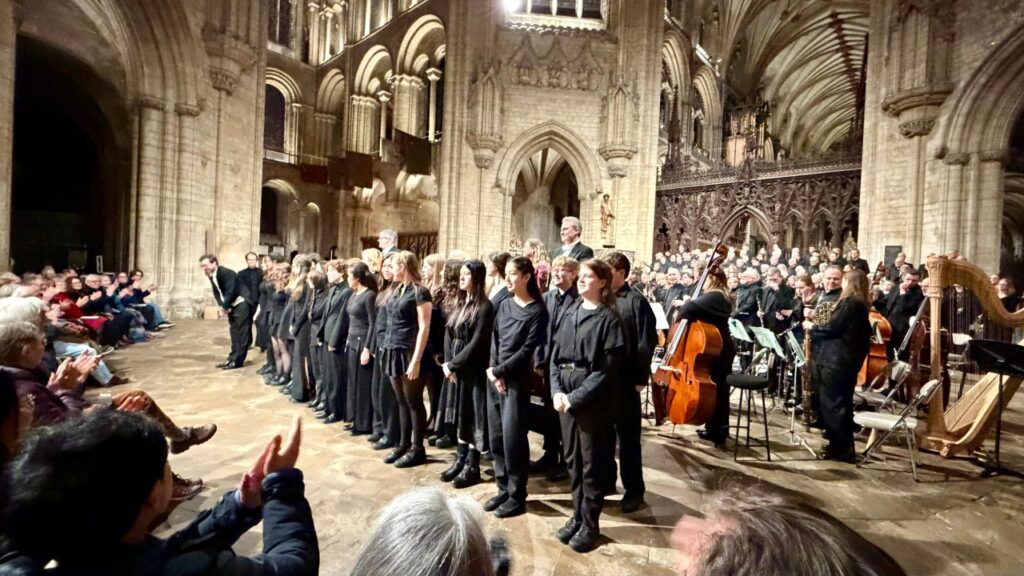
The children’s choir hovered in the background really well, like a cloud of innocence making starker, the realities of war that being brought into focus. The purity of their voices was an important integral part. It was most fitting that they featured at the end of the work seeking peace.
The large and smaller orchestras were vital. Nowhere did they have a simple accompanying role. The instruments chosen and the varied textures they provided were essential to portraying the mood and meaning of the words. Particularly notable were the percussive instruments often leading the way: the bells reminding us of funeral bells. Drums were essential ingredients including the rumble of the timpani warning us of something dramatic occurring as in Libera Me or the impending marching of the snare drum in the opening of The Next War. The silvery texture opening the Sanctus was indeed ‘holy’. The woodwind often provided notable tricky chattering excerpts that added to the texture, for example, in The End, while the brass were also important contributors, for example, in the Dies Irae. The strings were phenomenal throughout.
The soloists were well chosen and each had an essential role. Anita Watson (soprano) had a beautiful voice that rose easily into the vaults of Ely Cathedral. She was particularly impressive in Libera Me. Christopher Lemmings (tenor) was noticeably expressive, especially in Anthem for Doomed Youth bringing our the drama and anger of such phrases as ‘monstrous anger of the guns’. James Cleverton (baritone) had an exquisite voice and sang with clarity and empathy. Some of the highlights of this performance were when the tenor and baritone sang together for example, in The next war, and The Parable of the Old Man and the Young.
This was a most appropriate time for this performance to occur in view of the current unrest that is happening in our world now. Phrases, such as ‘the shrill demented choirs of shells’, ‘titanic tears’ and ‘the pity of war’ are as memorable now as they were when this fantastic work was written.
This was a most effective and unforgettable event to which much praise and thanks should go to the phenomenal conductor, Ralph Woodward.
Review: Rosemary Westwell
Photos: Chris Barton & Anna Rudd
You must be logged in to post a comment.